

The latest figures from the 2024-25 Active Lives Children and Young People survey are in, and the headline figures for Liverpool City Region (LCR) tell a positive story.
Currently, 53.8% of children and young people in our region are classed as active. Not only is this an all-time high for LCR, but it also sits above the national average of 49.1%.
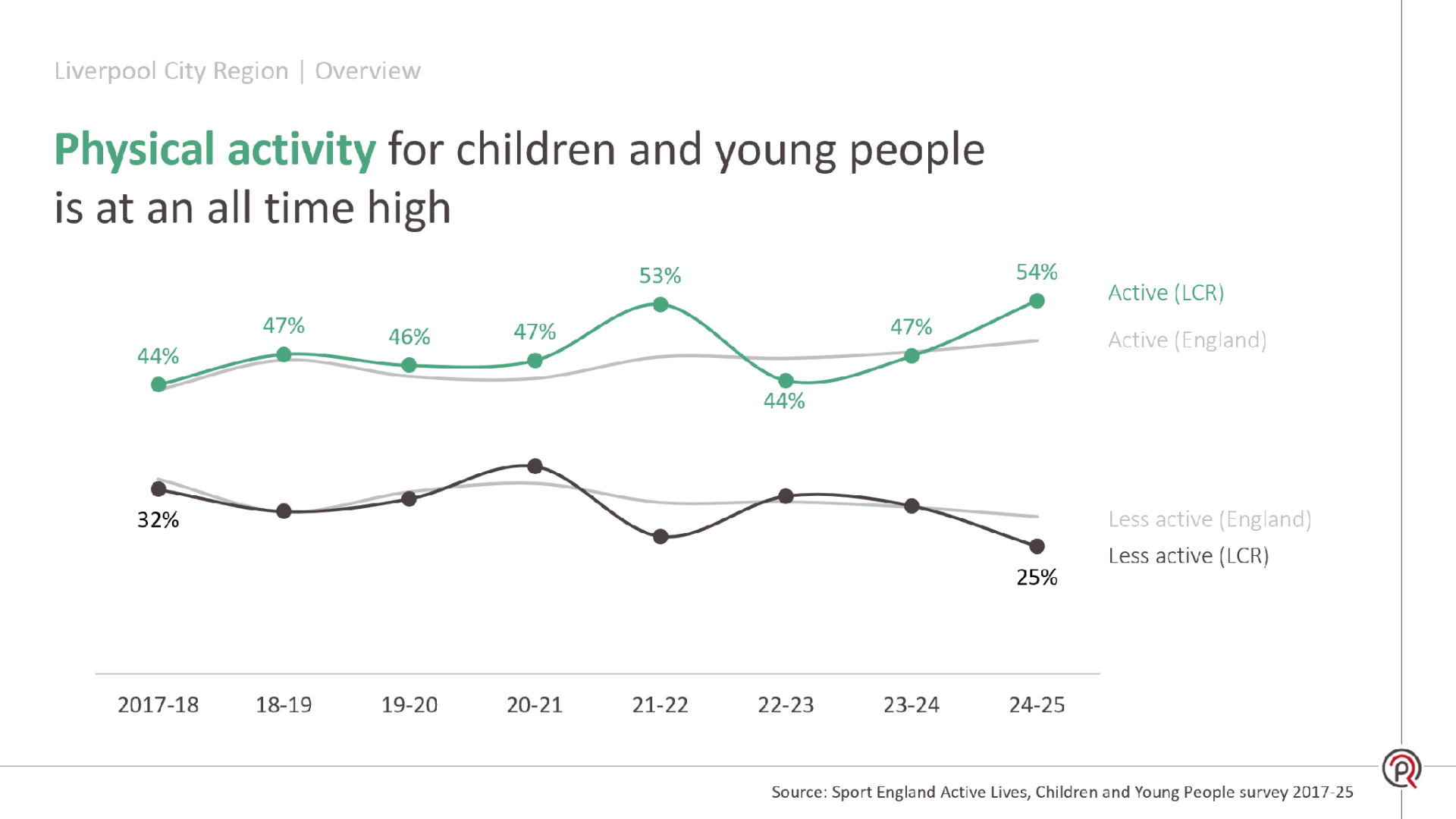
However, top-level data only ever tells part of the story.
To really understand these figures and ensure we’re designing the right interventions for the future, we need to examine the daily realities shaping the lives of LCR’s young people.
To understand physical activity levels, we must first understand the environment our children are growing up in.
When we look at regional insights alongside national research like the recent Youth Matters report, a picture emerges of unprecedented systemic pressure. While our youth population hasn’t grown significantly in recent years, the complexity of their needs has increased dramatically.
Locally, we are seeing rising rates of children living in relative low-income families (now at 32%), increased identification of Special Educational Needs (with 1 in 4 children now identified), and a sharp spike in mental health referrals.
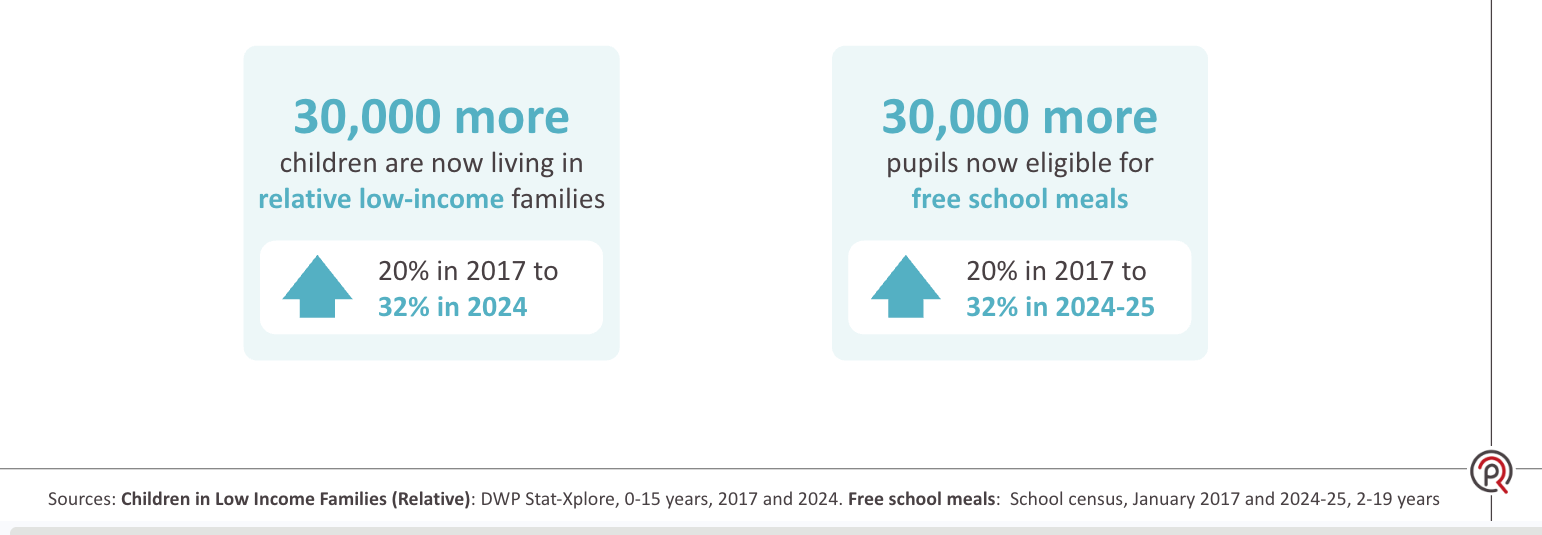
Physical activity does not happen in a vacuum. Disappearing community spaces, financial anxiety, and feeling unsafe in local environments are structural barriers that consistently predict inactivity.
LCR’s young people also tell us that there are day-to-day obstacles to overcome, from general tiredness and a lack of motivation to digital distractions, environmental factors, and peer group considerations.
The fact that physical activity levels have risen despite strong headwinds is a positive sign.
However, the data also clearly shows that the gap between the most and least affluent is widening. As a result, for many young people facing compounded disadvantages, getting moving is harder than ever.
This complex backdrop is exactly why we need the clearest possible picture of what is happening on the ground.
The overarching figures are encouraging, and a testament to the progress the city region has made with data collection in recent years. 1,936 surveys were completed across the 2025/26 academic year – a 120.5% increase from the 878 completed for 2024/25.
However, we currently lack a complete dataset. In the last survey cohort, we did not achieve strong enough sample sizes to report an accurate, representative picture for every one of our six local authority areas.
Broad regional averages are helpful, but they can easily mask hyper-local realities. When we lack robust data at a borough level, we risk missing hidden trends and leaving underrepresented communities behind.
Bridging this data gap must be a collective priority. A complete, region-wide picture is the only way we can ensure we are directing strategic support exactly where our boroughs need it most.
We know that physical activity has the power to change lives, by building belonging, reducing isolation, and improving physical and mental health. But we cannot design effective solutions in a silo.
The clearest message emerging from national youth consultations right now is that young people do not always feel heard. They are highly alert to tick-box engagement and will quickly disengage from initiatives that feel imposed upon them rather than built with them.
If we want to create inclusive, welcoming spaces where young people feel valued and represented, we have to embrace genuine co-production from the earliest possible stages.
The 2024-25 figures are heartening, but the context reminds us how much work is left to do.
We cannot rely on quick fixes to make real and lasting change. Instead, it is about the long, complex work of shifting deeply ingrained inequalities.
As we move forward, our collective effort must focus on two things. First, working closely with any schools selected for Active Lives to ensure all six boroughs are accurately represented in future data. Second, working alongside our young people to break down the systemic barriers standing in their way.
Together, we can shape an environment where every child in Liverpool City Region has the opportunity to live an active, healthy life.
MSP will be hosting a conversation with partners from across LCR about physical activity for children and young people on Tuesday 8th September, 2026. Please contact admin@merseysidesport.com if you’re interested in joining the discussion.
Web Design by Twentytwo