

Last month, the UK Chief Medical Officers (CMOs) released an updated version of their physical activity guidelines for adults.
Here is a breakdown of the refreshed guidelines and what they mean for Liverpool City Region (LCR).
The established target of 150 minutes of moderate intensity physical activity per week hasn’t changed.
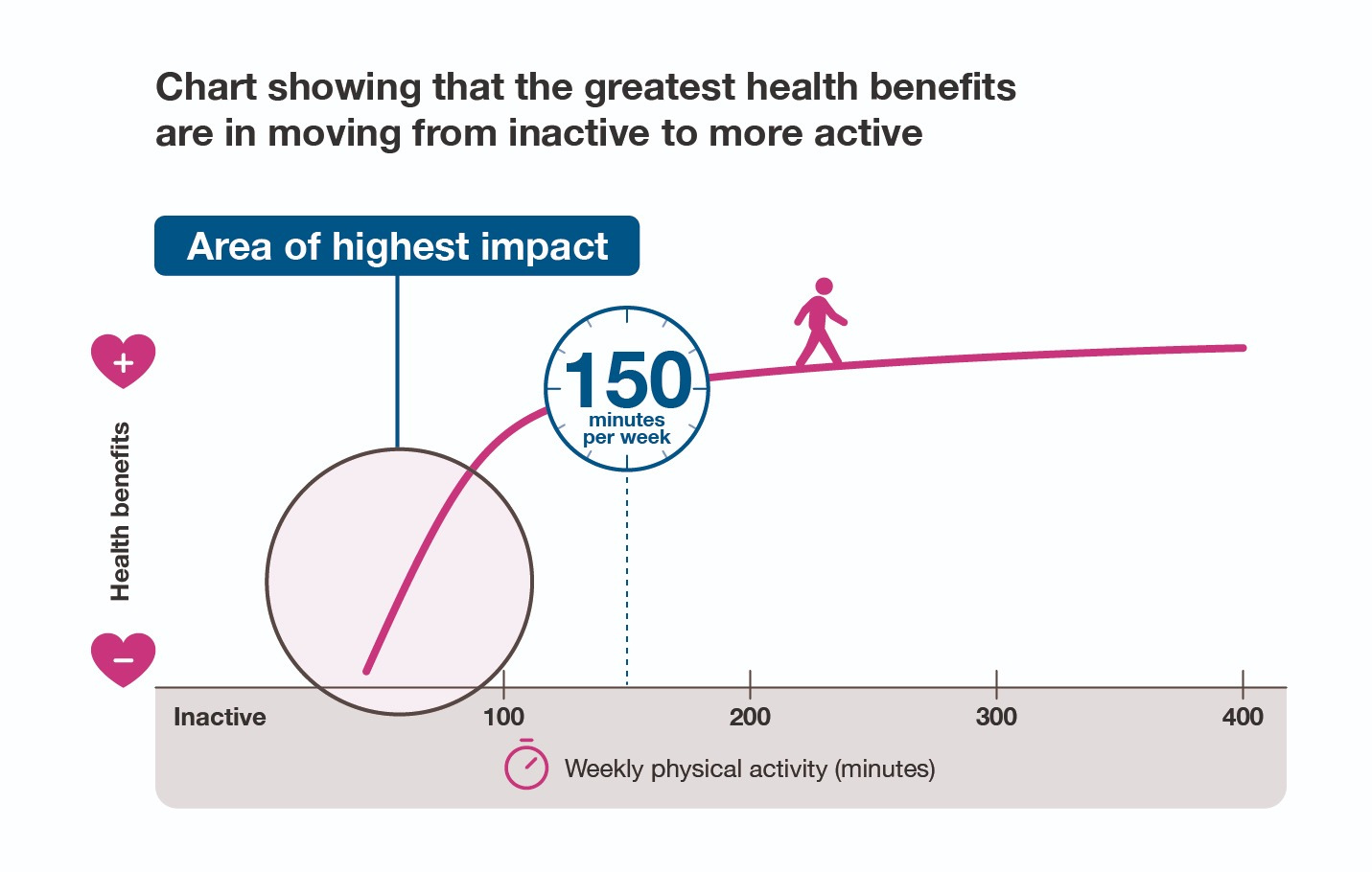
However, the CMO’s new physical activity guidelines emphasise a key message: any activity is better than none, and more is better still.
The latest evidence shows that while health benefits increase with more time spent active, the biggest health improvements occur when moving from complete inactivity to any level of activity.
Currently, according to the latest Active Lives Survey data, 28.1% of adults in Liverpool City Region are classed as inactive (doing less than 30 minutes of activity a week). Moving the dial on this metric is where we can make the most profound difference.
This is particularly important for people with long-term health conditions.
The Active Lives survey tells us that there are 4.8% more active adults with a disability or long-term health condition in LCR compared to the national baseline. However, a significant gap remains: they are still often the least active demographic, yet they have the most to gain.
The updated evidence confirms that the benefits of activity far outweigh the risks for disabled people and those with long-term conditions.
Significantly, this update also places a heavy emphasis on reducing the time we spend sitting. The CMOs recommend breaking up long periods of inactivity whenever possible, replacing sedentary time with even the lightest movement.
While cardiovascular health is vital, the new guidelines strongly emphasise the importance of strength and balance activities.
Adults are encouraged to perform muscle-strengthening activities targeting the major muscle groups at least twice a week.
This is particularly important for supporting helping to maintain independence and reduce the risk of falls in later life.
In Liverpool City Region, our population is steadily growing and ageing. Currently, 24% of our adult population (over 312,000 people) are aged 65 or older. With Active Lives data showing that inactivity begins to rise from the age of 55, prioritising strength and balance will be crucial to improving the region’s healthy life expectancy and alleviating long-term strain on our local NHS and social care services.
Regular strength and balance exercises are also recommended for individuals who are taking, or have recently taken, weight loss medication.
When discussing physical activity, terms are often used interchangeably. This can create a barrier to entry, as people assume that to be active, they have to run a marathon or join a gym.
As highlighted by Move Consulting’s Physical Activity Spectrum, being active is not limited to just one thing. It encompasses a wide range of behaviours that fall into five main categories:
You don’t have to engage in structured exercise or competitive sport to reap the benefits of physical activity. Everyday movement and recreation are excellent ways to build healthy habits into your daily life.
In other words: every move matters.
These refreshed guidelines reinforce why collective, community-centred approaches are so vital.
Ceriann Tunnah, Programme Director for Population Health for the Cheshire and Merseyside Integrated Care Board (ICB), explains:
“As part of the NHS 10-Year Plan and Neighbourhood Health Programme, we are committed to moving care closer to home. Creating opportunities within our communities to move more is a crucial part of this care.
“We know that movement can prevent people from becoming ill as well as improving recovery from illness and managing the symptoms of long-term conditions.
“It is key that organisations like the NHS, which are integral to our local communities across Liverpool City Region, recognise their role to educate, encourage, promote, and create more opportunities for movement for both patients and their workforce.”
The 2024-2025 Adult Active Lives Survey shows that while our region’s overall activity levels have remained resilient, inequalities persist.
For example, our least affluent households (NS-SEC 6-8) are more than twice as likely to be inactive compared to our most affluent households, and economic pressures continue to widen these gaps.
We can’t rely on quick fixes. Instead, it’s about the long, complex work of shifting deeply ingrained inequalities to enable people to live healthier, more active lives.
As Andy Taylor, CEO of the Active Partnerships National Organisation, notes:
“By listening to communities, understanding the specific barriers that people face in different places, and collaborating with them to find solutions that work for them, we can help more people benefit from being active.”
That’s why our goal is to remove the barriers that make active lives less achievable for people across Liverpool City Region.
This data reminds us that we must continue working together – across health, education, local government, and sport sectors – to celebrate people, communities, and the joy that movement can bring. In doing so, we can ensure that everyone has the opportunity to move more, safely, and in whatever ways work for them.
Web Design by Twentytwo