

For many women and girls across Liverpool City Region (LCR), deeply ingrained systemic barriers still stand in the way of living an active life.
One year ago, on 13th September 2025, LCR made history alongside Greater Manchester. In a trailblazing sister-city-region approach, we jointly became the world’s first place-based signatories of the International Working Group (IWG) on Women & Sport’s Brighton Plus Helsinki Declaration.
Championed by Metro Mayor Steve Rotheram, this landmark commitment provided a devolved mandate to tackle gender inequity.
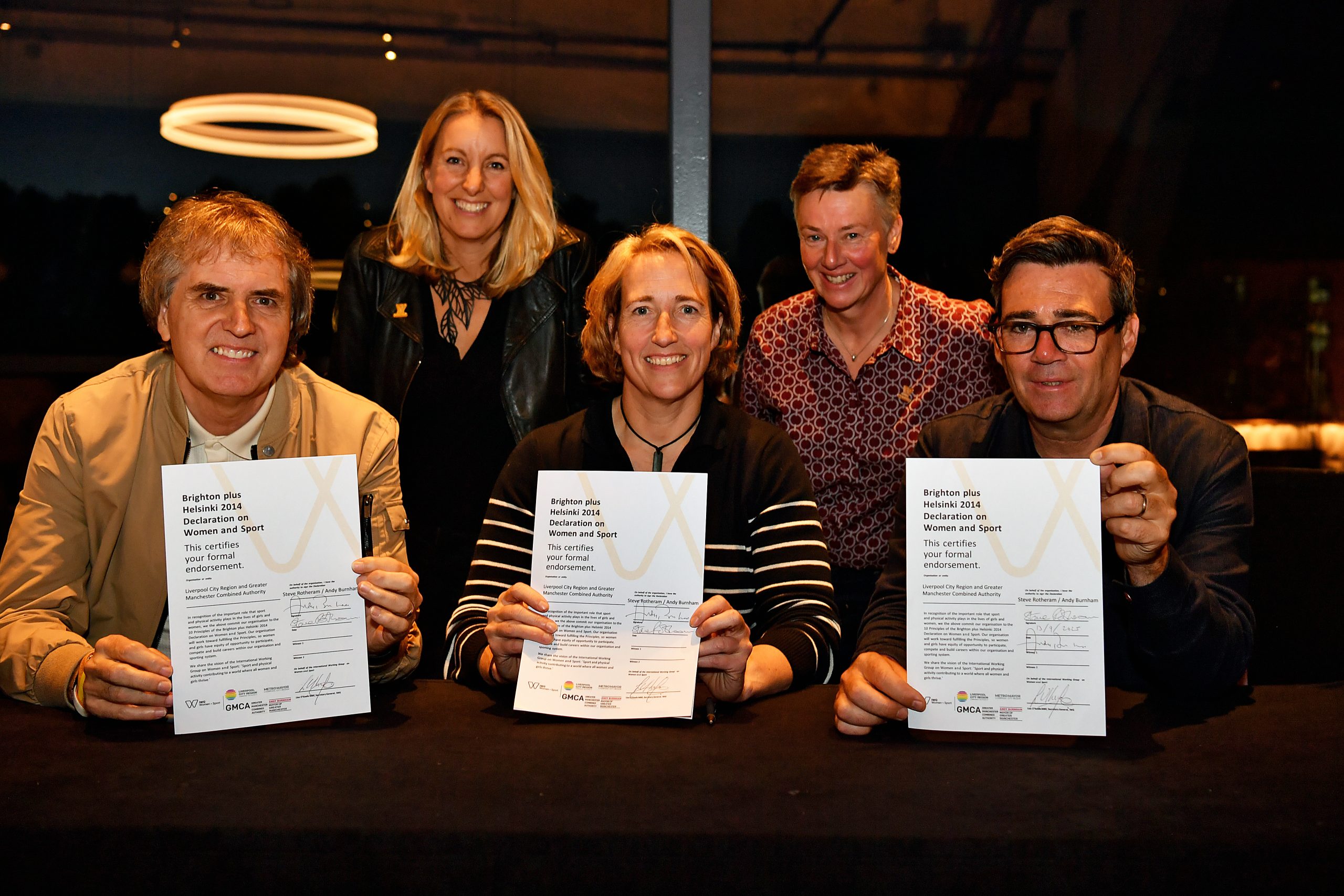
The disparities we face – with only 56% of women in LCR achieving the recommended 150 minutes of weekly physical activity, and many living in fear of stalking in venues such as leisure centres – represent a safety, access, and power gap, rather than a mere participation gap.
Over the last 12 months, as part of a wider cross-sector movement, our focus has been on shifting from a symbolic gesture to a living, participatory framework.
See how we are turning a global commitment into local reality – and read the 12-month review for a deeper dive.
Translating a global declaration into meaningful local action required a fundamentally different approach.
Rather than operating in silos, we collaborated with the LCR Combined Authority to create Shaping Change, a unified, region-wide action plan.
This plan ensures that top-down policies are actively shaped by lived, local experiences. To drive it forward, we convened a collaborative, cross-sector working group bringing together key stakeholders from transport and active travel, local authorities, major football foundations, higher education, and public safety networks.
Gemma Ireland, Sport & Physical Activity Development Manager at St Helens Borough Council and cross-system working group member, highlights the impact of this framework:
“The declaration has helped give a wider framework and a collective voice to work that is happening locally. In St. Helens, our focus has increasingly moved beyond simply asking how we get more women and girls to be active, to asking what needs to change in our environments, organisations, and systems so that women and girls feel safe, represented, and genuinely able to be active. Being part of the city region commitment gives us the opportunity to share our learning, influence change, and make the work bigger than any one programme, place, or organisation.”
We also invited partners across the region to pledge their commitment to our shared vision, and the response has been incredible.
Diverse organisations – ranging from local authorities and universities to football foundations and grassroots clubs – have signed up, with Liverpool John Moores University (LJMU) proudly becoming the first organisation to publicly announce its pledge.
Dr Tori Sprung, Reader in Clinical Exercise Physiology at LJMU’s School of Sport and Exercise Sciences and another cross-system working group member, summarises the energy driving the work forward:
“One year on, the Brighton Plus Helsinki Declaration has provided an important catalyst for turning shared ambition into collective action… Working collectively has enabled connections, conversations, and opportunities that would have been difficult to achieve in isolation. As we move into the second year, I am excited to see that work develop alongside the wider regional programme, bringing research and practice closer together and generating evidence that can help us identify where and how we can create meaningful, lasting change. The Declaration was an important commitment, but its real legacy will be determined by what we collectively do with it.”
The momentum generated over the past year has created ripples of innovative, region-wide initiatives designed to tackle physical, cultural, and systemic barriers.
From rolling out an Active Bystander programme that will challenge normalised sexism to rethinking the safety of our public parks and streets, partners across LCR are actively changing the landscape of movement. You can explore the full breadth of these projects in our 12-month review.
To see this whole-system approach in practice, we look to partners like Liverpool County FA (LCFA).
Richard Jones, LCFA’s Head of Communities, highlights how their pledge is driving action across multiple layers of the system:
“Liverpool FA is proud to have pledged our support for gender equity… ensuring that female football remains a key priority in our 2024-2028 strategy by increasing opportunities for females of all ages to have clear entry routes into the game, whether that be playing, coaching, refereeing or volunteering. We are using the game as a catalyst to address social issues such as Violence Against Women & Girls through our She Inspires Police Programme, and ensuring females have equal access to funded facilities and qualifications. Crucially, we have introduced our Female Football Forum to continually listen to the experiences and needs of our females, ensuring our programmes are catering directly to their requirements.”
Kirsty McLean, Executive Director of Public Sector Innovation & Partnerships at the Liverpool City Region Combined Authority, reflects on the significance of this collaborative journey:
“Translating a global treaty into genuine local action requires a unified, system-wide approach. By bridging top-down leadership with grassroots reality, we are ensuring that our region’s policies and spaces are actively shaped by lived, local experiences. The progress we have made over the last 12 months proves that when we collaborate across sectors – from transport to sport to community safety – we can create safer, more equitable environments for all women and girls.”
In July 2026, a delegation from LCR took this collaborative blueprint to the global stage at the IWG Global Summit in Birmingham.
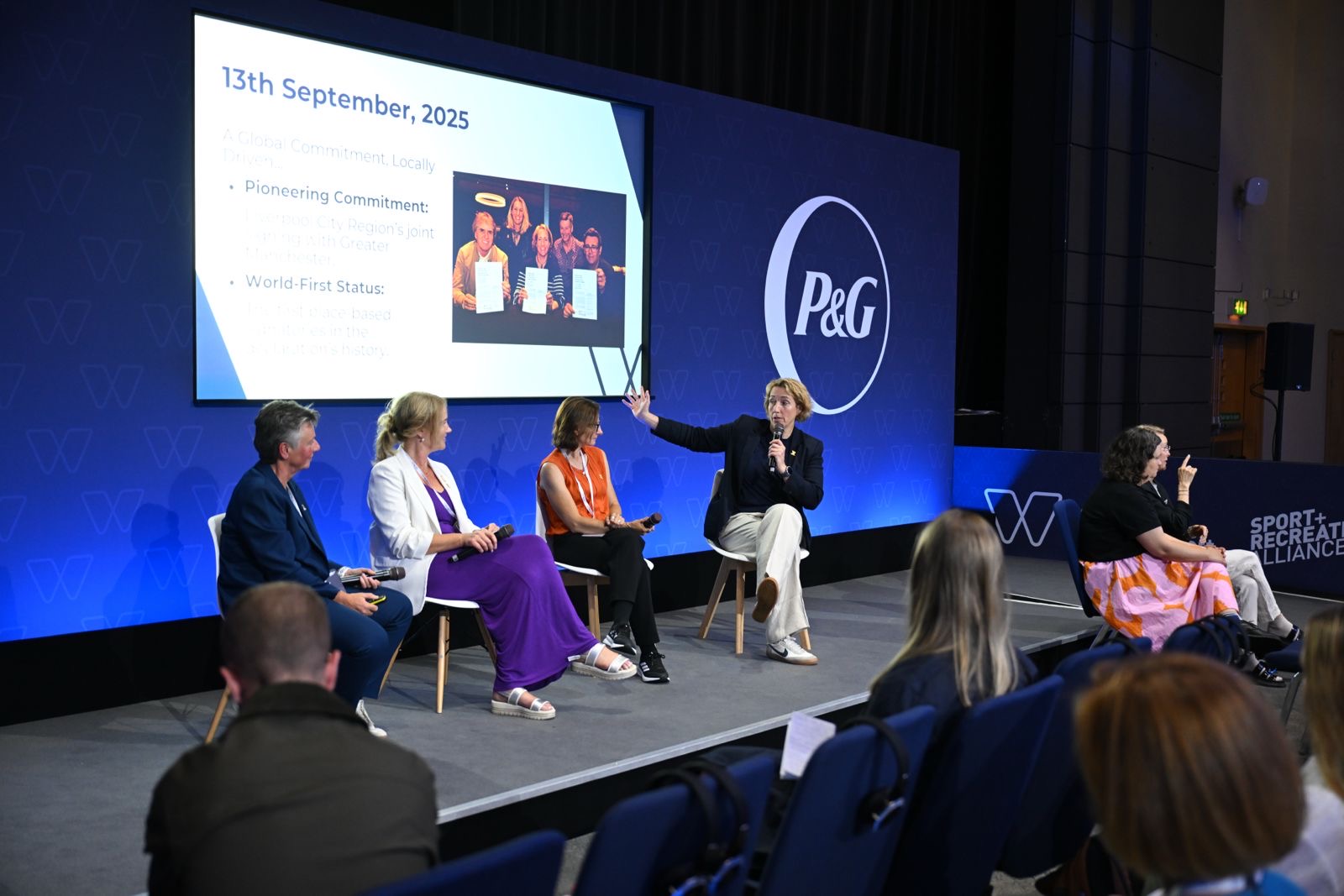
Presenting to international leaders, we showcased our place-based approach and how it offers a replicable model for the rest of the world.
Lisa O’Keefe MBE, Secretary General of IWG Women and Sport, echoed the power of this methodology:
“The size of the prize for getting this right is enormous – not just for women and girls, but for our wider communities and service providers. Liverpool City Region and Greater Manchester’s approach is brilliantly simple. By using the Brighton Plus Helsinki Declaration as a catalyst to connect senior leadership with grassroots reality, they are demonstrating exactly how this global treaty should be used to drive genuine, place-based change.”
The past 12 months have laid a crucial foundation, but the real work continues on the ground in our communities and organisations. Creating healthier, more active environments where women and girls can thrive requires a collective, whole-system effort.
Gaby Crolla, Executive & Leadership Coach and MSP Board Member, highlights the importance of looking to the future, particularly through an education lens:
“If we want to see long-term change, we need to influence attitudes and opportunities early. Schools are key to making sure girls and young women can see that sport is genuinely for them. The Declaration gives us a shared ambition, but the challenge now is to keep turning that commitment into practical change. The real measure of success will be what changes on the ground for women and girls across the region.”
Justine Blomeley, CEO of Merseyside Sports Partnership (MSP), underscores this point:
“Signing the Brighton Plus Helsinki Declaration was a catalyst for the Liverpool City Region – the start of a movement to remove barriers to physical activity and drive significant systemic change. It has sparked a number of strands of work focused on changing culture, increasing activity levels, and creating the conditions for everyone to be more active. What’s particularly exciting is the momentum it has created. More people and organisations are coming together, building on each other’s energy and turning a shared ambition into collective action. The movement is now generating its own momentum, creating new connections, new opportunities, and the potential for lasting change across the whole region.”
We invite you to dive deeper into the breadth of this ongoing work by reading our comprehensive anniversary review.
Whether you are an individual, a community group, a club, or a large organisation, your contribution is vital. Help us maintain this momentum by pledging your support for the movement and gain access to a free toolkit to showcase your commitment to making movement equitable for all.
Read the 12-Month ReviewWeb Design by Twentytwo