Data is a vital tool for understanding physical activity across Liverpool City Region (LCR), but it only tells part of the story.
We recently kicked off the first of our place-based data roadshows with Scott Hartley from Press Red, the organisation that helps us unpack Active Lives survey data for the city region.
Rather than just presenting graphs, Scott used real-life anecdotes to bring Active Lives data for both adults and children and young people to life. He explored how cultural norms are created within communities, and how the compounding effects of different layers of the system – from local infrastructure to social networks – can make it incredibly hard to shift everyday behaviours.
Crucially, the session highlighted that a place is never static, with everything from demographics to asset bases constantly changing.
That’s exactly why we need to bring the people who know the place best into the room to inform and challenge the data.
There was a diversity of partners in the room, from Sefton Council and Public Health to the borough’s CVS.
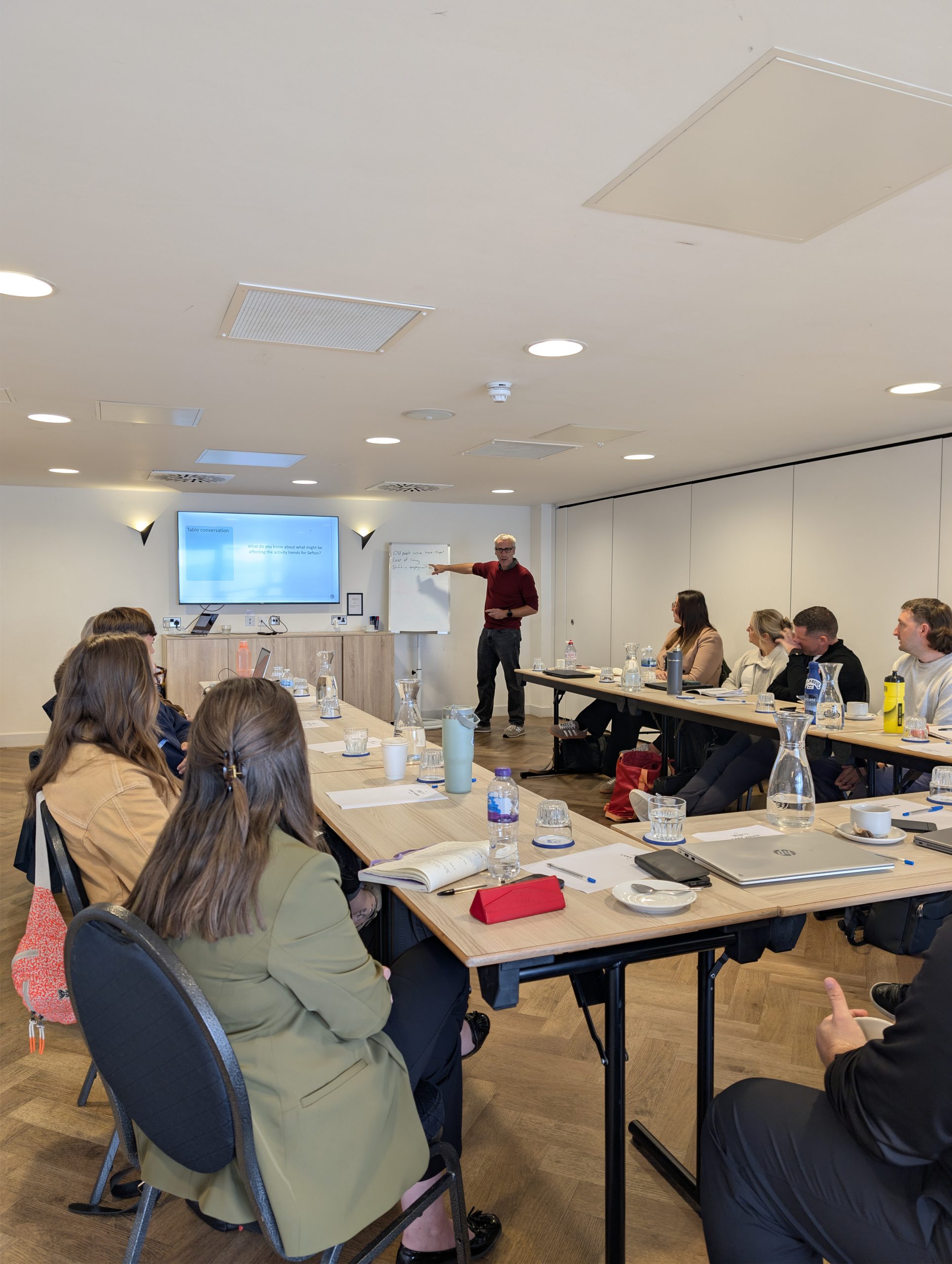
During the roadshow, data was used as a jumping-off point to demonstrate the need to think differently and spark conversations between stakeholders.
When we layer statistics with real-life understanding, it forces us to ask better questions:
As Scott explained:
“Active Lives can provide us with a really rich picture of how people move, but numbers on their own can only take us so far. The real value of these roadshows is getting people who know the place best in a room together to test the data against what they see every day: the facilities behind school gates, the places people don’t feel safe, the group that’s quietly getting people moving.
“Having a range of different perspectives around the table, like we had in Sefton, is so important to help us think about the data but also to explore who else we need to connect it to. Physical activity is shaped by so many different factors such as planning, highways, health, schools and communities, not just sport. When you bring those perspectives together with the data, you can start asking much better questions, and that’s where real change begins.”
This approach of looking beyond the numbers resonated with attendees.
June Brandshaw, Development Manager at Sefton MBC, reflected on the impact of the session:
“It was really interesting to see the breakdown of what activities both children and adults are actually doing. It also highlighted the people that aren’t here, and knowing who we now need to contact and get involved. It finally feels like we’re making a start – that we’ve got the people in place to take this information, run with it, and start to build. It’s everyone’s job.”
These are the kinds of vital, system-wide conversations we want to be having across the whole city region.
Amy Fisher, Merseyside Sports Partnership’s Delivery Officer for Children & Young People, had this to say about the session:
“The Sefton workshop was the first time we’ve brought partners together to look at Active Lives data. It focused on moving beyond simply having the data to asking what it tells us about our communities and how we can use it to inform local decisions, understand inequalities and shape the opportunities we provide for adults and children and young people.
“It also highlighted the importance of continuing to support and encourage more schools to complete the survey; the more local data we have, the better our understanding of the experiences of children and young people across the region and the more useful that insight becomes for local decision making.”
Sefton was just the start. We are excited to be bringing these sessions to the other five boroughs of the city region in the coming months.
Our goal is to bring our partners together to better understand the data unique to their areas, discover how it can be practically applied to our collective work, and combine statistical insight with vital lived experience.
We are working with partners in all six LCR boroughs to organise data roadshows.
Come and help us bring the numbers to life, ask the right questions, and collectively shape the future of physical activity in your community.
To find out more, get in touch at admin@merseysidesport.com.
Web Design by Twentytwo